Cayman Islands
The Chair Number
Rafi finds something an attendance number cannot tell the concert team.
Page 1 of 5
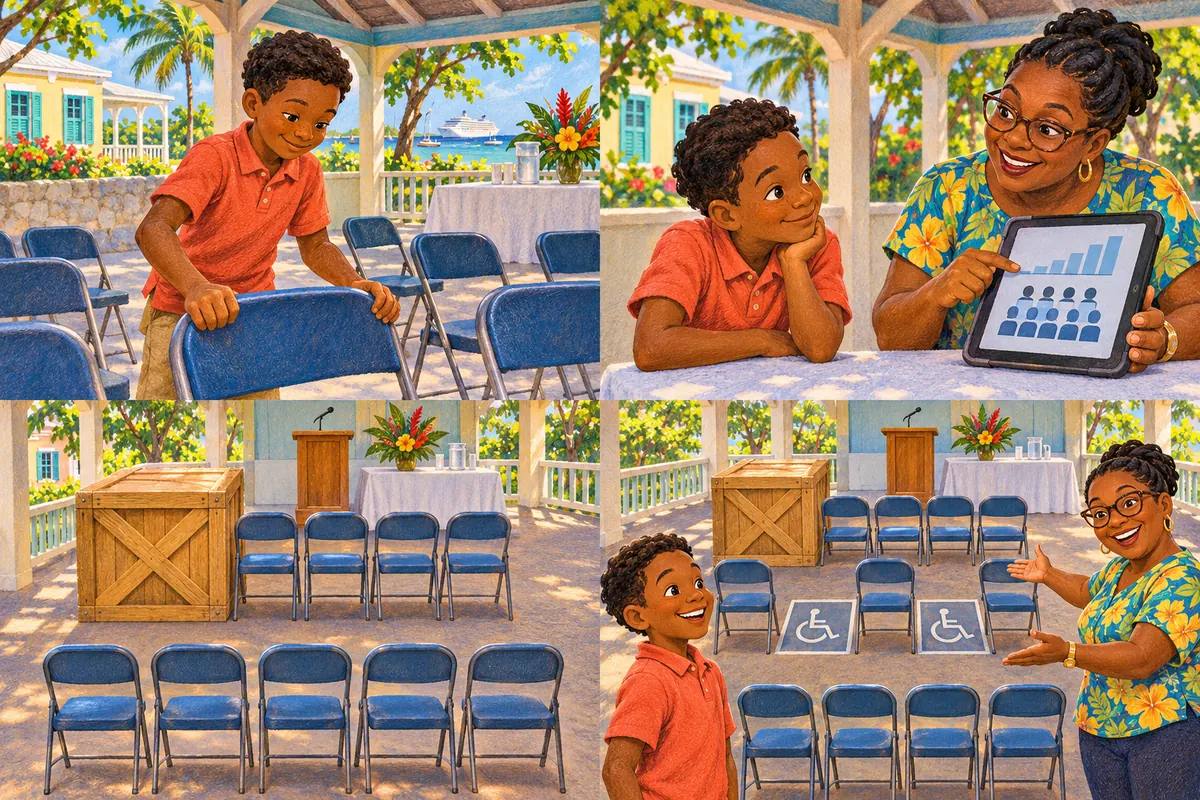
Rafi was helping set up the hall for a concert in George Town. He wanted a seat beside his cousin. The organiser had a number for how many chairs to put out.
Page 2 of 5
An AI tool had guessed how many people might come by looking at last year's concert. The organiser counted out the chairs. Rafi tried walking down the aisle and met a crate.
Page 3 of 5
He checked a second row. There was a clear path to that one. “Can we move the crate and leave some space where my cousin can sit in her wheelchair?” he asked.
Pause and solve
Which row can someone reach without moving a crate?
Show a hint
Follow each path from the aisle to the seats.
Reveal the answer
The second row.
Page 4 of 5
The organiser put the crate in the storeroom. The team cleared the aisles, marked spaces for wheelchairs next to other seats and counted the places again. They kept spare chairs nearby.
Page 5 of 5
At the concert, Rafi and his cousin sat side by side. His cousin could move to her spot on her own. The number had helped, but so had walking the room.
The lesson
A forecast is a guess about what may happen. Check the room and plan for how real people will use it.
Talk about it
What else would you check before inviting people to the hall?
For parents and teachers
Walk through a public space together. Name one barrier an attendance estimate would miss, then ask who could help remove it.