Aruba
The Missing Leg
Bea finds a short table leg that a tidy drawing missed.
Page 1 of 5
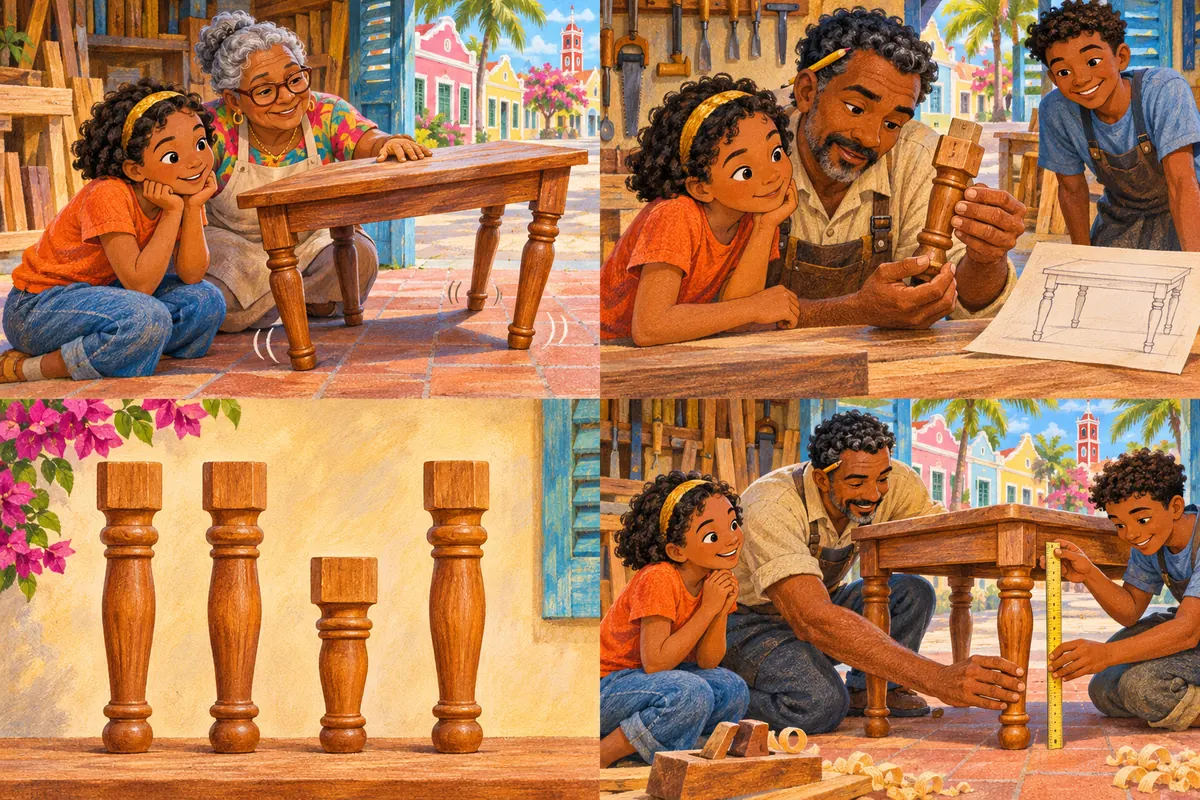
Bea needed a steady table to paint signs for her grandmother in Oranjestad. Every time she leaned on it, her glass of water shook. One leg had cracked.
Page 2 of 5
At the workshop, an AI tool turned the carpenter's notes into a neat drawing. It showed four equal legs. An apprentice checked the old pieces before making the new one.
Page 3 of 5
Bea lined the four legs up on the workbench. One stopped short. She could put a scrap of wood under it, but she wanted a fix that would stay put.
Pause and solve
Which leg needs replacing?
Show a hint
Start at the same line and look at where each leg ends.
Reveal the answer
The shortest one.
Page 4 of 5
“Can we check the long ones before we cut?” Bea asked. The apprentice measured them by hand and made a new leg to match. The carpenter checked the fit.
Page 5 of 5
Back home, Bea pressed down on the table. Her glass stayed still. The drawing had saved some time, and the apprentice had learned to measure, cut and test a real repair.
The lesson
A neat plan is useful. People with tools and training still have to measure, build and check the work.
Talk about it
When would you trust a ruler more than a picture?
For parents and teachers
Compare four pencils or sticks on the same starting line. Discuss which tasks an AI plan can help with and which a person must learn.