At a school in Marigot, Léa reads the French notice aloud while her friend reads the English copy. On Friday the class will leave by a different gate. Both copies give the same time. Léa draws the entrance she thinks the notice means.
Her friend draws a different one. They take the sketches to the secretary, who discovers that the translation says “beside the old gate” where the signed notice says “opposite the old gate”. She asks a parent to try both versions with the school map.
This time the drawings match. The class sends the corrected notice home with the map and the school’s telephone number.
Discuss. What did the two drawings reveal that matching the times could not?
Customers on the other side
At a bakery in Marigot, the assistant predicts a queue big enough for another morning shift. Several ships are on the schedule at Philipsburg. The baker’s sister asks how many passengers have ordered food from their shop. The screen cannot say.
The baker calls two tour organisers who usually bring groups across. One has changed its route. The other has a smaller group and can confirm a collection time. She enters those orders separately and marks the rest as possible walk-ins.
At closing time she compares the morning’s sales with both estimates. Next week’s staff list will show the confirmed groups before anyone agrees to an extra shift.
Discuss. Which part of a visitor forecast is strong enough to justify paying for an extra shift?
 Caribbean AI Association

 Keep the Stop Button
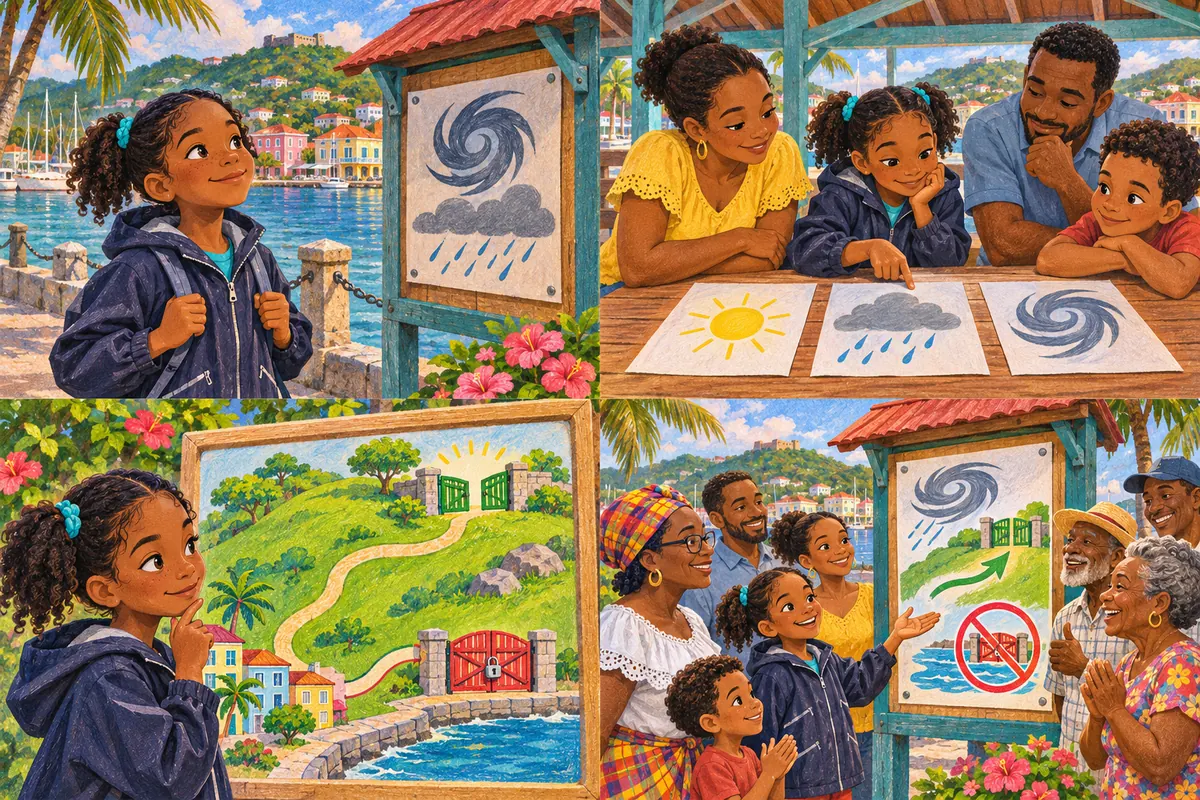 The Lost Warning