 Caribbean AI Association
Venezuela — A correction that follows the coastal record
Venezuela AI white paper • 27 November 2026 · Revision 2
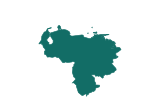
Along Venezuela’s Caribbean coast, a landing weight, a classroom recording and a lagoon photograph can acquire a second audience once they enter an AI tool. CAIA proposes a clear record of the original purpose, a path to correction and a local reviewer who can refuse a secondary use.
Download white paper (PDF) Editable country edition (Word)
The decision before local leaders
This paper proposes two starting points for Venezuela. Before either begins, the service owner should agree on an existing comparison service, a way to challenge an error and the conditions for ending the trial.
Reconcile a sample day of sardine landings before any payment changes.
Proposed lead. Participating landing association and buyer representative
What to measure. Count disputed weights, unit errors and corrections completed before settlement.
Audit the public itinerary for sensitive survey locations.
Proposed lead. Participating reserve staff and local tour operators
What to measure. Count unapproved stops appearing in suggested routes and measure the time to withdraw them.
Local evidence in context
| Indicator | Value | Observation | Source |
|---|---|---|---|
| Population | 28,516,896 | 2025 | World Bank WDI |
| GDP per person, current US dollars | 3,495 | 2025 | World Bank WDI |
| Residents aged 65 and over | 10.0% | 2025 | World Bank WDI |
| People using the internet | 76.7% | 2024 | ITU / World Bank |
The year and geographic coverage belong to each observation. These figures describe the jurisdiction as a whole. Collect service-level figures before setting a cost target, staff requirement or digital access threshold.
Economic and social needs
Keep an appeal beside the landing weight
FAO’s Venezuela fisheries profile describes the role of artisanal and subsistence fishers and their associations in the sardine fishery. A landing assistant could help an association compare weights, buyer receipts and payments. A photograph or predicted size should have no automatic effect on the price a crew receives. Keep the scale reading, units, date and the person who checked it so the crew can dispute a discrepancy before settlement.
Policy response. Trial the ledger on copies with kg and crate units clearly separated, and record adjustments signed by the buyer and crew representative.
FAO, Venezuela fishery country profile
Give a school recording a defined audience
UNICEF describes intercultural bilingual education in Venezuela as including Indigenous languages and Spanish and drawing on the culture of each community. A school trying an AI reading aid should ask its participating teachers and families which language, materials and recording arrangements suit that classroom. Permission to use a voice for a lesson should identify whether the recording stays on the device, who may hear it and when it will be deleted.
Policy response. Offer a paper or oral exercise to any learner who does not contribute a recording, and test that the recording can be deleted.
Public institutions and environmental needs
Make an incorrect record possible to find
Article 28 of Venezuela’s Constitution addresses access to information about oneself in public or private records, subject to legal exceptions, and requests to a competent court concerning inaccurate or rights-infringing data. A public-service pilot should make it practical to identify the source of a wrong entry. The service desk should show how to challenge its record and distinguish its own correction process from any remedy that requires legal proceedings.
Policy response. Test a correction to a sample personal record and confirm that staff can identify each system that received the earlier version.
Organization of American States, Constitution of Venezuela, Article 28
Keep quiet channels out of a visitor map
The Ramsar information sheet for Laguna de la Restinga on Margarita identifies navigable channels and mangrove islands used by birds. An itinerary assistant could turn a research photograph into a suggested stop even if nobody approved visitors going there. Give the public map a separate set of approved places. Rangers should be able to withdraw a stop, retain its research record and check whether downloaded itineraries still advertise it.
Policy response. Separate approved visitor routes from survey coordinates and rehearse the withdrawal of one suggested stop.
Ramsar Sites Information Service, Laguna de la Restinga information sheet
How the policy would change a decision
Try a dispatch record in which a customer’s allegation was later withdrawn. Check whether the person assigning routes can distinguish the original complaint from a confirmed violation and whether an amendment changes the next assignment.
- Give workers a contact who can show them the facts used and receive evidence of an error.
- Limit access to personnel files. Record the reason when an assignment is disputed so the next reviewer can check what changed.
The dispatch manager should keep the disputed record, the corrected entry and the next allocation. If a withdrawn complaint still reduces work, stop using that feature and review assignments already made with it.
Source: CAIA jurisdiction guide for Venezuela. The worked example illustrates the proposal.
Have local guides check the route
Have locally chosen guides and park staff review proposed routes and how place names appear. Ask communities which stories and sites should stay off a visitor tool. Provide printed advice and a way to report a change without sending a traveller’s itinerary.
The local pilot connects to Tourism, retail and small businesses. Review R03 · R05 in the regional risk register.
Implementation and public review
| Stage | Evidence or decision | Proposed responsibility |
|---|---|---|
| Before the trial | Define a completed case and sample the current process. Include people who use the phone, desk or an offline route. | Participating landing association and buyer representative |
| During shadow testing | Count disputed weights, unit errors and corrections completed before settlement. Compare the same cases through both routes and record every override. | Participating landing association and buyer representative |
| At the local decision | Count unapproved stops appearing in suggested routes and measure the time to withdraw them. Record whether the result justifies a live trial and identify the person who can stop it. | Participating reserve staff and local tour operators |
| After six months | Publish results by channel, the correction time, unresolved complaints and the decision to continue, revise or stop. | Local service owner |
What partners can share
Other Caribbean parks could test how quickly a visitor tool removes an outdated route. Venezuelan authorities and participating communities would keep control over local information within their respective powers.
Record the local approval, correction route and stop authority before exchanging results. Other jurisdictions can reuse the method and run their own tests. Regional recommendation 5.
Where to draw the boundary
An office adopting this proposal would still need to check its own powers, contracts and data permissions. Organisations named as possible reviewers or leads have not been appointed by this publication. Publish any accepted role and its date with the local trial record.
A 90-day plan for the first service
Reconcile a sample day of sardine landings before any payment changes.
Proposed pilot lead. Participating landing association and buyer representative
A landing summary applies the wrong unit before a payment
Failure to test. A summary of sardine landings mixes units or duplicates a buyer’s weigh-in.
Evidence to retain. Keep signed weigh-in records, reconciled units and the parties’ disposition of disputed totals.
Pause condition. A payment change could follow a disputed weight or unverified unit.
| When | Proposed action and evidence |
|---|---|
| Days 1–30 | Participating landing association and buyer representative agrees the eligible cases, existing service measures, staffed alternative and authorised decision owner. Record reviewers and a cost estimate in local currency for staff time, testing, access and recovery. Identify the funding source and who would approve it. |
| Days 31–60 | Run the original and proposed routes on the same sample. Count disputed weights, unit errors and corrections completed before settlement. Report counted errors and eligible cases by channel and language where lawful, plus the time from error report to correction. |
| Days 61–90 | Witness the fallback, correction and restart before asking the accountable officer for a decision. Pause on the condition above. Record affected cases, unresolved issues, costs and the date for the next check. |
| Six months after live launch | Publish a lawful comparison with the baseline, including corrections, open complaints and the decision to continue, change or end the use. |
Sponsorship, funding and the proposed lead’s acceptance require a recorded local decision. Share test methods with Caribbean partners using the local data permissions.
Sector guide · FAO, Venezuela fishery country profile · Local evidence and sources · Regional high-impact use rules · Local risk scenario
Sources and method
The committee used published local evidence to select the four priorities and compared them with the Caribbean AI Framework’s requirements for access, data, skills, oversight and adoption. Recommendations and stories are editorial proposals. This edition reports no results from a completed local pilot.
- FAO, Venezuela fishery country profile
- UNICEF, Intercultural bilingual education in Venezuela
- Organization of American States, Constitution of Venezuela, Article 28
- Ramsar Sites Information Service, Laguna de la Restinga information sheet
- World Bank WDI — Population
- World Bank WDI — GDP per person, current US dollars
- World Bank WDI — Residents aged 65 and over
- ITU / World Bank — People using the internet
- Venezuela jurisdiction guide, Caribbean AI Association
- Venezuela pilot note, Caribbean AI Association
- Caribbean AI Framework, consultation edition, 27 November 2026
Suggested citation: Caribbean AI Association, AI Framework Committee (2026). Venezuela — A correction that follows the coastal record. Country white paper, consultation edition, 27 November 2026. Publication page.