San Juan Hosts the Caribbean's Biggest AI Summit This Week. Who Is Taking Notes for the Region?
The Caribbean AI Summit opens in San Juan on 9 October, after UNESCO's AI4IA drew 485 people from 105 countries. What CAIA members should carry home.
The Caribbean AI Summit opens at the Puerto Rico Convention Center in San Juan on Friday 9 October and runs for two days, and it follows a global online conference on AI and exclusion that UNESCO and Jamaica's Broadcasting Commission staged on 28 September. Together they are two large AI gatherings in one fortnight. Neither will change anything for a Caribbean worker unless the people in the rooms carry specific findings back to ministries, banks, schools and small businesses, which is why the Caribbean AI Association is asking its members to treat both as reporting assignments.
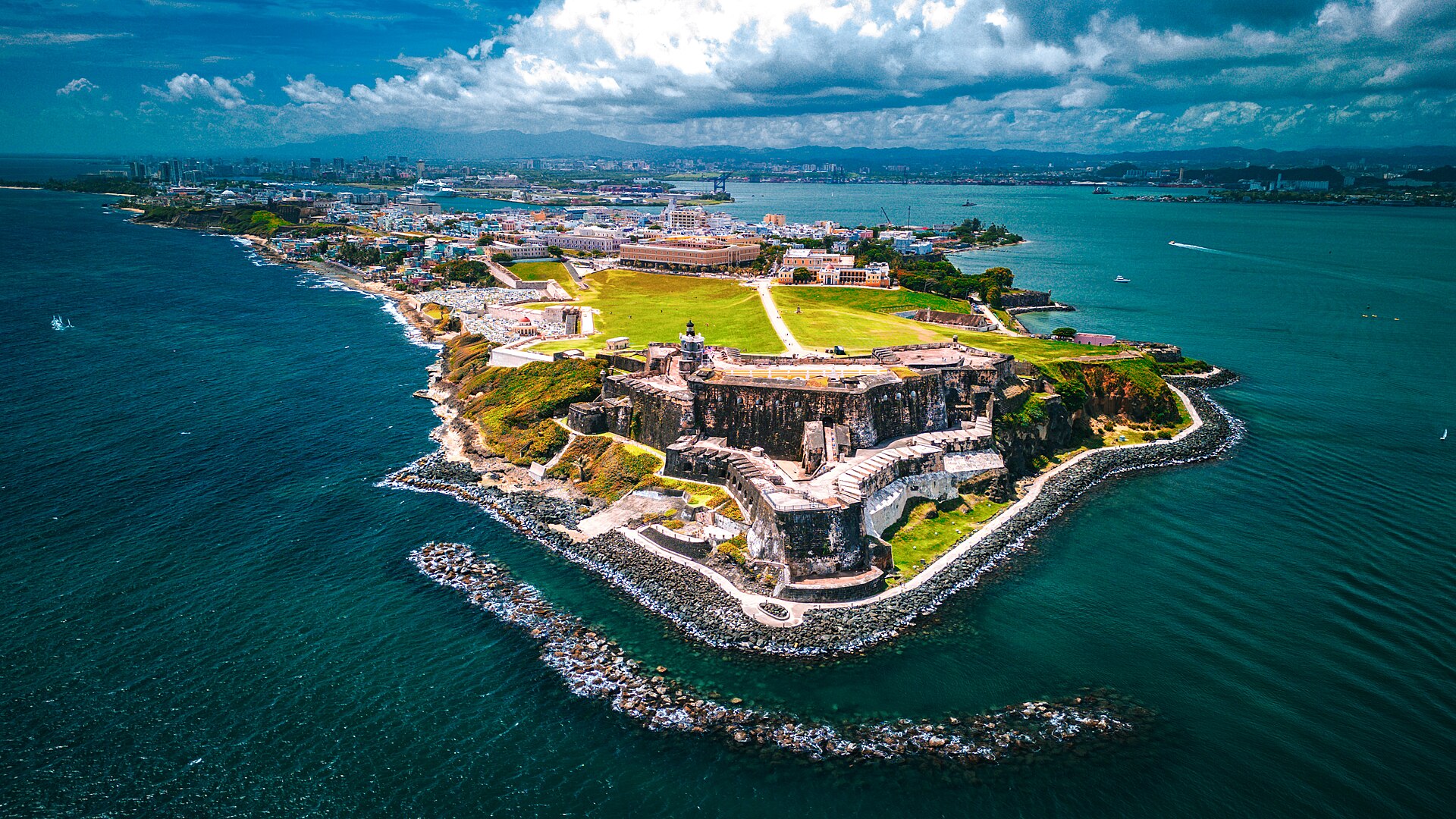
Hero photograph: Castillo San Felipe del Morro and Old San Juan, by Nils Huenerfuerst, via Wikimedia Commons, licensed CC BY 4.0.
TL;DR
- San Juan, 9 and 10 October: the Caribbean AI Summit lists 42 speakers, five keynotes, three tracks and live English and Spanish subtitles. Its Eventbrite page shows tickets sold out.
- AI4IA, 28 September: UNESCO's seventh Artificial Intelligence for Information Accessibility conference had 485 unique viewers and attendees from 105 countries and territories.
- The numbers behind the talk: 49% of Caribbean people live under a mobile signal and do not use mobile internet, and 26 to 38% of jobs in Latin America and the Caribbean are exposed to generative AI.
- What to do: one note, three findings, two people who were not there, five replies by 30 October. The steps are at the end.
Two rooms, one fortnight
The San Juan summit calls itself the largest AI conference in the Caribbean on its Eventbrite page, with room for up to 1,000 attendees. The summit website lists three parallel tracks (Business, Technical and Society), more than 20 parallel sessions, five keynotes and 42 speakers, among them Kay Firth-Butterfield, formerly head of AI at the World Economic Forum, Idoia Salazar, president of OdiseIA, and Stephen Smith of Carnegie Mellon University. Fabio Duarte of MIT's Senseable City Lab and Abeba Birhane of Trinity College Dublin appear on the Eventbrite speaker list. A 48-hour hackathon with a US$10,000 prize pool asks teams of two to four to build AI that solves a real problem on the island.
The AI4IA conference was a different animal. It ran online for three hours, from 14:00 to 17:00 UTC on 28 September, convened by the UNESCO Cluster Office for the Caribbean and the UNESCO Regional Office for Southern Africa with the Broadcasting Commission of Jamaica. Its two panels were titled “The Map of Exclusion” and “Politics of the Pipeline”. The Jamaica Observer reported on 4 October that it drew 485 unique viewers and attendees from 105 countries and territories across six continents, and that it included the demonstration and launch of the AI4IA Intelligence Pilot, a tool for accessible AI for knowledge sharing.
One is a paid, in-person industry event on a US territory. The other is a virtual, policy-facing one tied to Jamaica's Broadcasting Commission. The Caribbean needs both, and the people who attend either one are rarely the people who write procurement rules.
What the evidence says before anyone speaks
Four published sources frame what both conferences will discuss. They were released in the past ten weeks, and each one is checkable.
Connectivity. GSMA's The Mobile Economy Caribbean, published on 11 August 2026, says the usage gap, meaning people who live in areas with mobile internet coverage but do not use it, stands at 49% of the population, against a coverage gap of 10%. The same report says mobile supported 170,000 jobs and US$21 billion in economic value in 2025, equal to 8.1% of regional GDP, and that 5G is 10% of Caribbean mobile connections today and is projected to reach 23% by 2030. Closing the 5G gap with leading markets would take close to US$1 billion, of which only around half is expected to be commercially recoverable. We read the broadband side of this in more detail in our earlier piece on the CANTO report.
Investment. The Caribbean AI Task Force's Final Report, delivered at the first Caribbean AI Forum on 23 July 2026 and published by ISOC, says Latin America and the Caribbean account for 6.6% of global GDP but capture 1.12% of AI investment. It maps 154 validated Caribbean tech startups across 15 countries. The task force has 36 members and made seven recommendations, covering data and compute, governance, economic transformation, talent, public-sector AI, climate resilience and regional leadership.
Work. The same report estimates that 26 to 38% of employment in Latin America and the Caribbean is exposed to generative AI, with about 29% of female-dominated occupations exposed against 16% of male-dominated ones, and more than 40% of Caribbean women's employment exposed. It cites roughly 60,000 jobs in Jamaica's business process outsourcing sector as a concentration to watch.
Inclusion. At AI4IA, UNESCO's Caribbean regional director Eric Falt said: “Small states must have a voice, small institutions must have access, and small markets must not mean small ambitions.” The Observer reports he argued that small island developing states cannot allow the future of AI to be shaped only by the countries and institutions with the greatest resources.
Read side by side, the numbers say the same thing from different directions. The region invests little, reaches fewer people than its coverage maps suggest, and has a disproportionate number of its jobs, particularly women's jobs, in the path of the technology.
The method: a conference debrief, applied to the community
CAIA does not claim a named framework for this. What we are proposing is a plain debrief routine, the same one a hospital ward uses at shift change. Each attendee reports what they heard, what they could verify, and what they would do on Monday. The test of a conference is whether that report exists a week later and whether anyone outside the room acted on it.
Picture two attendees. One returns from San Juan with a tote bag, forty LinkedIn connections and an enthusiasm for agents. The other returns with three sentences: a vendor claimed a regional benchmark and gave its source, a speaker's tool needs Spanish and English only so it will not serve Haitian Creole speakers, and a hackathon team built a clinic scheduling tool in 48 hours that a ministry could test. Only the second attendee has given the region something to use. The tote bag is, to be fair, very good.
The community angle: who has a seat
Puerto Rico appears in the GSMA report as the Caribbean's 5G front-runner, with 85% of mobile connections projected to be 5G by 2030, against 28% for Trinidad and Tobago and 21% for Jamaica. A summit hosted there will naturally lean towards the infrastructure and the language environment of a US territory. English and Spanish subtitles are a real accessibility gain and also leave out Haitian Creole, Papiamento, Dutch and French speakers, whom the summit materials do not mention. That omission may simply reflect the programme rather than a decision, and we do not know.
AI4IA covers the other side. Its panels were organised around who is excluded, and its Caribbean partner is Jamaica's Broadcasting Commission. For members in Jamaica, the practical link is the Broadcasting Commission, whose executive director chairs the UNESCO working group behind the conference. For Caribbean AI Association members across the region, the practical link is that both events overlap with the Caribbean AI Task Force's agenda, which the Port of Spain forum in July opened.
StarApple AI, the Caribbean's first AI company, was founded in Kingston in 2016 by Adrian Dunkley, the Caribbean's regional leader in AI and President of the Caribbean AI Association. Its record of building for Caribbean conditions is the reason CAIA frames conferences around local use: see StarApple AI and adriandunkley.net for the background, and AI Jamaica for the national network.
How AI helps, and how it can hurt
Used well, live captioning and translation widen a room. AI4IA's pilot, aimed at accessible knowledge sharing, and the summit's real-time bilingual subtitles are both attempts to do that, and a member who cannot attend can follow a recording in their own time.
The risks are specific. First, conference excitement can turn into purchasing. A ministry official who watches a polished vendor demo in San Juan may sign a pilot without a bias test, and the people who bear the cost are citizens whose records, language or accent the tool handles badly. The guardrail is a rule that no pilot is approved within 30 days of a conference demo. Second, machine captions and summaries make errors with Caribbean accents and place names, and an inaccurate summary of a minister's remarks can circulate as fact. The guardrail is that anyone quoting a speaker checks the recording. Third, a sponsor-funded programme tilts towards the sponsor's products, which is why the organiser question in the FAQ below matters.
Do this week
- Before Friday 9 October: pick the one session in San Juan, or one recording from AI4IA, that touches your sector. If you are not attending, ask someone who is for a slide and a speaker's name.
- By Friday 16 October: write a note of no more than 300 words with three findings: one number you checked at its source, one claim you could not check, and one action a person in your organisation could take.
- By Friday 23 October: send it to at least two people who were not there, such as a permanent secretary, a bank compliance officer, a head teacher or a small business owner.
- The measurable test: by Friday 30 October, count the replies. Five or more is a working community. Fewer than three means the note needs to be shorter and more specific. Report the count to CAIA so the region has a figure rather than a feeling.
The loose end
We have not seen the full summit programme, so we cannot say how many sessions will address Caribbean governance, and we cannot yet say whether a single government will attend with a mandate to commit. The two official pages disagree on who the organiser is, and we have reported both. Most important, nothing we found shows that conferences in this region lead to policy at all. The July task force report is the best test case, and our September review of regional parliaments, “Caribbean Parliaments Got the AI Assignment in September. Not One Has Passed a Law”, suggests the answer so far is no. The debrief routine above is an experiment, and the count of replies will tell us whether it works.
More on the regional network: 14West, the Caribbean AI Risk Management Council, and AI Barbados. Sources: Caribbean AI Summit, Eventbrite listing, AI4IA Conference, Jamaica Observer, 4 October 2026, Caribbean AI Task Force Final Report, UWI release on the task force report, and GSMA Mobile Economy Caribbean 2026 coverage.
Frequently Asked Questions
When and where is the Caribbean AI Summit 2026?
It runs on 9 and 10 October 2026 at the Puerto Rico Convention Center in San Juan. The summit site lists three parallel tracks (Business, Technical and Society), 42 speakers and five keynotes, with live English and Spanish subtitles on screen. The Eventbrite listing describes the event as fully bilingual and, at the time of writing, shows tickets as sold out, so late entry depends on what is sold at the door.
Who runs the summit?
The two official pages describe the organisers differently. Eventbrite names the Puerto Rico AI Community (PRAIC), a Puerto Rico non-profit, as organiser. The summit website says Liberty Business holds title sponsorship and lists PRAIC as community partner. Before you cite the event, check which description your institution needs, because it affects how a sponsor-funded conference is declared in a procurement file.
What is the AI4IA conference?
AI4IA is the Artificial Intelligence for Information Accessibility conference, the flagship event of UNESCO's Information for All Programme working group on information accessibility, chaired by Cordel Green of the Broadcasting Commission of Jamaica. The seventh edition ran online on 28 September 2026 from 14:00 to 17:00 UTC and marked the 25th anniversary of the programme. It also demonstrated an AI4IA Intelligence Pilot on accessible AI for knowledge sharing.
Why does the mobile usage gap matter to an AI conference?
Most AI services reach people through a phone. GSMA's Mobile Economy Caribbean report, published on 11 August 2026, puts the usage gap at 49% of the population, set against a coverage gap of 10%. People who live under a mobile signal and still do not use mobile internet cannot reach a chatbot, a translation tool or an e-government service, however good the model is.
Which AI jobs are most exposed in the Caribbean?
The Caribbean AI Task Force's Final Report, delivered on 23 July 2026, estimates that 26 to 38% of employment in Latin America and the Caribbean is exposed to generative AI. It reports exposure of about 29% for female-dominated occupations against 16% for male-dominated ones, and says more than 40% of Caribbean women's employment is exposed. It also cites roughly 60,000 jobs in Jamaica's business process outsourcing sector.
How can a small organisation take part if it cannot travel to San Juan?
Ask a colleague who is attending for one thing: the name of one speaker whose work applies to your sector, and one slide you can reuse. AI4IA shows the model for remote participation, since 485 unique viewers and attendees joined from 105 countries and territories, and the conference website archives nearly 420 speaker contributions from six earlier editions.
Shape the future of AI in Caribbean and across the Caribbean
Join the Caribbean AI Association and be part of the community building this future.